Neighborhood guide
Wangsimni & Hanyang University: a housing guide for international students
Wangsimni is a four-line transfer hub and a campus hill at the same time. Where to live near Hanyang University, what each sub-area actually costs, and the paperwork that protects your deposit.
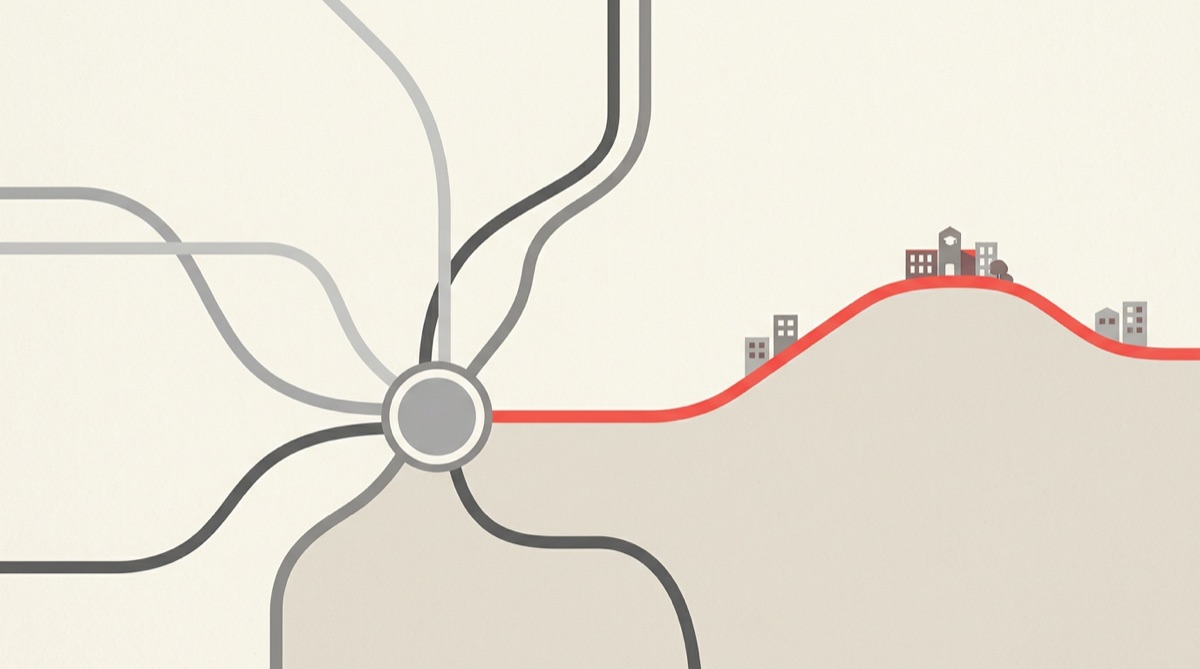 FOUR LINESONE HILL
Key takeaways
- Wangsimni is not one rental market. The station side sells transit and pays for it in rent; the campus hill sells a short walk and pays for it in stairs and older buildings.
- Hanyang University Station is on Line 2 and sits at the campus gate, but Wangsimni Station one stop away is where four lines meet — that gap is worth roughly ₩100,000–200,000 a month in rent.
- Sageun-dong is the cheapest walk-to-class option and the steepest. Haengdang-dong is the balance point most of our clients end up choosing.
- Your deposit is protected by paperwork, not by trust: pull the property register yourself, then file the residence report and get the confirmed-date stamp within 14 days of moving in.
- Do not assume you have a dormitory bed. Check the university's dorm eligibility and application window before you plan your budget around it.
Wangsimni (왕십리) is one of the busiest addresses in eastern Seoul and one of the least understood by newcomers. People arriving for Hanyang University search for "Wangsimni rooms" and get results spread across a two-kilometre radius that includes a hillside of forty-year-old low-rise buildings and a cluster of new towers over a department store. Those are different products at different prices with different risks. This guide separates them.
Why Wangsimni is two markets, not one
Hanyang University has its own subway station on Line 2, directly at the campus gate. One stop west, Wangsimni Station is a four-line transfer hub. That single stop is the whole story of local rent: the closer a building sits to the transfer hub, the more it charges, regardless of how far it is from your lecture hall. Students who optimise for the station and students who optimise for the campus end up in completely different neighbourhoods.7
Lines serving the Wangsimni area, and what each one is actually useful for.7
| Line | Station | Where it takes you | Practical note |
|---|---|---|---|
| Line 2 (green) | Hanyang Univ. | Gangnam, Sindang, City Hall, Hongik Univ. | At the campus gate. The loop line — direction matters for travel time. |
| Line 2 (green) | Wangsimni | Same loop, one stop from campus | Transfer point for everything below. |
| Line 5 (purple) | Wangsimni | Jongno, Gwanghwamun, Yeouido | The commute line if you intern in a central office. |
| Gyeongui–Jungang | Wangsimni | Yongsan, Hongik Univ., Ichon | Reaches Hongdae without a transfer, but runs at longer intervals than the numbered lines — check the timetable rather than assuming a train every few minutes. |
| Suin–Bundang | Wangsimni | Seoul Forest, Apgujeong Rodeo, Seolleung, Bundang | Fastest route to eastern Gangnam. |
The second thing to understand is topography. The Hanyang campus sits on a hill, and the residential streets that back onto it climb with it. A listing that says "8 minutes to campus" may mean eight minutes uphill with a suitcase, and in winter those streets ice over. Walking the route yourself — at night, in the shoes you actually own — is not optional here in the way it might be on flat ground near other campuses.
The sub-areas, and who each one is for
Walking times are approximate and assume the hill. Verify your own route on foot before signing.
| Sub-area | To campus | What the housing stock is | Who it suits |
|---|---|---|---|
| Sageun-dong (사근동) | 3–12 min walk | Older low-rise villas, one-rooms, goshiwon; the hill directly behind campus | Tightest budgets and shortest walks. Accept steep streets and older buildings. |
| Haengdang-dong (행당동) | 10–20 min walk | Mixed: villas, small one-rooms, some newer buildings, redeveloped apartment blocks | The balance point — walkable to campus, walkable to the station. |
| Sangwangsimni / Doseon-dong (상왕십리·도선동) | 15–25 min walk, or 1 stop | Officetels above commercial floors, newer apartment towers near the station | People who value transit, lifts, security desks and late-night shops over rent. |
| Majang-dong (마장동) | 20–30 min walk or bus | Older residential blocks, quieter streets, market district | Lower rent, fewer late-night amenities, still on Line 5. |
| Geumho-dong / Eungbong-dong (금호동·응봉동) | Subway or bus | Hillside residential toward the Han River | Quiet and green; steep, and further from student life. |
| Yongdap-dong (용답동) | Bus or 1 stop | Older low-rise, the cheapest stock in the area | Lowest rent; weakest walkability and thinnest late-night footfall. |
See listings around Wangsimni and Hanyang University
Filter by walking distance to your building, not to the station — the two are often in opposite directions here.
What you will actually pay
Figures as of 2026-08 · verify the live listing8
| 고시원 (goshiwon), private bathroom | ₩380,000–520,000 / month | No deposit in most cases. Utilities usually included. Room sizes vary far more than price does. |
|---|---|---|
| Sharehouse, private room | ₩450,000–650,000 / month | Deposit typically ₩300,000–1,000,000. Check whether the operator will register your address. |
| 원룸 (one-room studio), low deposit | ₩550,000–750,000 / month | Deposit around ₩1,000,000–3,000,000. Lower deposit is bought with higher monthly rent. |
| 원룸, standard deposit | ₩450,000–600,000 / month | Deposit around ₩5,000,000–10,000,000. Same room, restructured. |
| 오피스텔 (officetel) near Wangsimni Station | ₩700,000–950,000 / month | Deposit commonly ₩5,000,000–10,000,000. Lift, security desk, higher maintenance fee. |
| 관리비 (maintenance fee), monthly | ₩50,000–120,000 | Quoted separately from rent. Ask exactly what it covers before you compare two listings. |
These are ranges we have seen in our own concierge casework around Wangsimni (about 40 cases), not a market survey. Our inquiry base skews heavily toward Japanese nationals and toward 3–12 month stays, so it under-represents family housing and long leases. Individual buildings sit outside these ranges in both directions.
Across our full inquiry log of 801 web-form inquiries between July 2025 and August 2026, the median monthly rent requested was ₩600,000 and the median deposit ₩1,500,000, with 35% of inquiries for a 12-month stay. Wangsimni cases sit close to that median — this is a mid-budget area, not a cheap one and not a premium one. Again, the sample is majority Japanese nationals and should be read as our client mix rather than the Seoul market.8
Before you sign: verify the building, then the paperwork
A lease near a university is not a lower-risk lease. The protections that matter — the right to stay in the property against a new owner, and priority to recover your deposit if the building is auctioned — do not come from the contract itself. They come from occupying the property, reporting your residence, and having the contract stamped with a confirmed date (확정일자, hwakjeongilja). Miss the paperwork and you have a piece of paper, not a claim.3
Wangsimni lease checklist
- 등기부등본 (property register), pulled by you Not the copy the agent hands you. Order it yourself from the Supreme Court's internet registry for under ₩1,000. Confirm the registered owner's name matches the person signing, and read the encumbrance section for mortgages (근저당권) — a heavily mortgaged building puts your deposit behind the bank.
- Licensed agent's registration, displayed in the office A licensed 공인중개사 must display their registration certificate. If the person showing you rooms cannot show you theirs, stop.
- Written lease contract Standard written form, both copies signed, both parties' details filled in. Verbal agreements and messenger screenshots are not a lease.
- Deposit paid to the registered owner's own account Not to the agent's personal account, not to a relative, not in cash. Keep the transfer record.
- 확정일자 (confirmed-date stamp) on the contract Obtain it at the local community service centre (주민센터) or online through the internet registry office, as soon as the contract is signed.
- Residence report filed after you move in Report your new address so that your occupancy is on the public record. For registered foreign residents this is the change-of-residence report; the Immigration Act treats it as the equivalent of a Korean resident's move-in report for these purposes.
- Move-in condition record Optional Timestamped photos and a short video of every existing defect — mould, water marks, broken fittings, the door lock — on day one, sent to the landlord in writing the same week.
- Passport and alien registration card (or entry stamp, if the card has not arrived) Some landlords ask for the card before signing. If yours has not been issued yet, a written note of your application status usually suffices — do not let anyone hold the original document.
Your first two weeks
From landing to legally settled
- Before departure Settle the dormitory question Check the university's dormitory eligibility, application window and result date. Do not build a budget on a bed you have not been offered in writing.
- Days 1–2 Short-term base near the area Book a week of temporary accommodation within one or two subway stops. Signing a year-long lease from abroad, sight unseen, is where most avoidable mistakes happen.
- Days 2–5 Viewings, on foot See at least four rooms across at least two sub-areas from the table above. Walk the route to campus once in daylight and once after dark.
- Days 5–7 Register check, then contract Pull the property register before you pay anything. Sign, transfer the deposit to the owner's account, and get the confirmed-date stamp the same day if possible.
- Within 14 days of moving in Report your residence Registered foreign residents must report a change of residence within 14 days of moving. This is also what activates your deposit protection.
- Within 90 days of entry Alien registration If your stay exceeds 90 days, complete alien registration. Many universities arrange group or on-campus sessions for new international students — ask your international office before booking your own appointment.
Your international office is a genuine resource here, not a formality: it can usually confirm dorm results, tell you which immigration steps the university handles as a group, and issue the enrolment documents landlords sometimes ask for. Exchange students on a single semester should read our short-term rental guide before signing anything twelve months long — a 12-month lease is a landlord convention, not a legal requirement.
You will generally have less institutional support with housing than degree students, and dorm priority usually sits with degree and exchange students. Budget for the private market from the start. If your programme is six months, do not let an agent talk you into a twelve-month contract on the promise that you can "just leave early" — early termination normally means you carry the rent until a replacement tenant is found.
Is the dormitory cheaper than a room nearby?
Compare total cost, not headline rent. A dorm fee usually bundles utilities and internet and is billed per semester; a one-room bills rent, a maintenance fee and utilities separately, and locks up a deposit you cannot spend. Dorms also come with rules — curfews, guest restrictions, and closure over long vacations, which can leave you needing somewhere to sleep between semesters. Get the university's published fee and the vacation policy in writing, then add ₩60,000–150,000 a month to any private option before comparing.
Can I sign a six-month lease near campus?
Yes, but expect a narrower selection and a higher monthly rate for the same room. Twelve months is a landlord convention driven by turnover cost, not a legal minimum. In this area, goshiwon and sharehouses are where short terms are genuinely normal; standard one-rooms will often quote you a premium or refuse.
How much is the agent's fee?
Brokerage fees for residential leases are capped by Seoul's municipal ordinance, calculated from a transaction value derived from the deposit and monthly rent rather than from the rent alone. At the deposit and rent levels typical in this area, that usually lands somewhere in the low hundreds of thousands of won. Ask the agent to write out the calculation and the applicable cap before you agree — a fee that cannot be explained on paper is a fee to question.
Should I look at Seongsu-dong instead? It is right next door.
Seongsu is one or two stops away and has become one of Seoul's fashionable districts, which is reflected in rent. It is a reasonable choice if you value the cafés and the Seoul Forest side and can absorb the difference, but it is not the budget alternative to Wangsimni — it is the more expensive one. If you want quieter and cheaper, look at Yongdap-dong or Majang-dong instead.
Do I need a Korean guarantor?
For a standard deposit-and-monthly-rent lease, no — the deposit is the landlord's security, which is precisely why deposits exist. If someone demands a Korean guarantor on top of a normal deposit for an ordinary one-room, treat it as a signal to slow down and ask what else about the arrangement is non-standard.