Housing literacy
Goshiwon Explained: Who It Is Actually For—and Who Should Skip It
A goshiwon can solve an urgent housing problem, but it is not a smaller version of a studio. Use this guide to decide whether its trade-offs fit your stay before you pay.
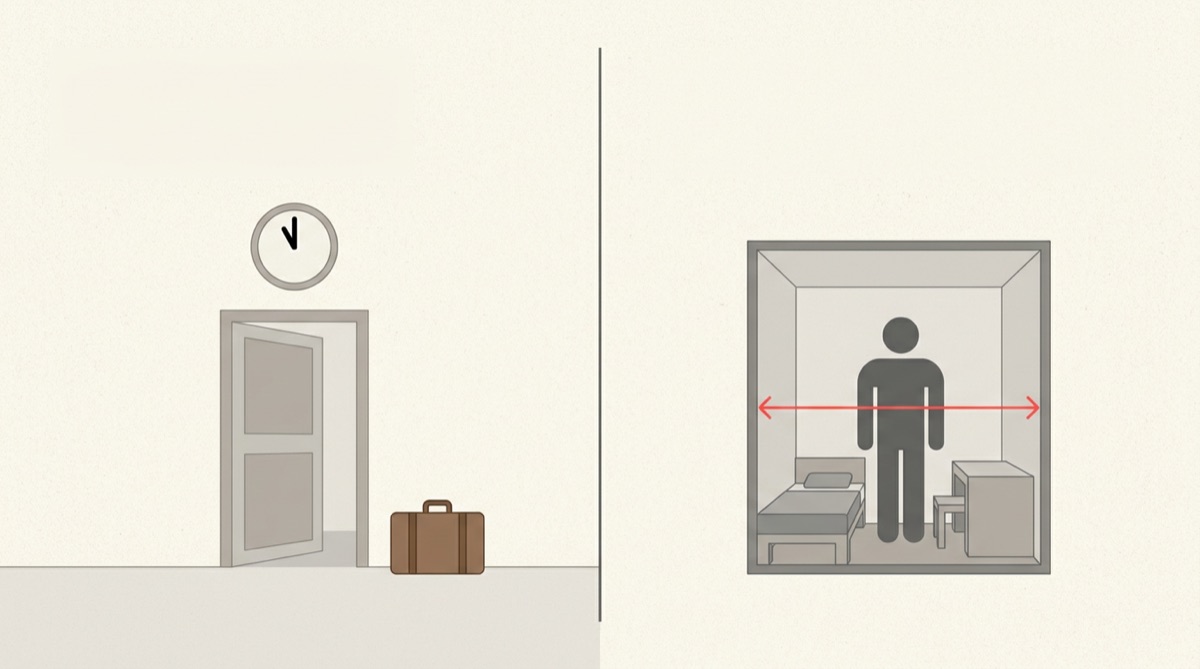 MOVE FASTLIVE SMALL
Key takeaways
- Choose a goshiwon for speed, a lighter move-in burden, and a simple landing place—not for apartment-level privacy.
- It can suit a disciplined, light-packing resident who is out most of the day and can live with shared facilities.
- Skip it if quiet sleep, cooking, private bathroom access, or dependable address paperwork are non-negotiable.
- View the exact room, not a sample room. Walk the escape route and test the floor at the time you would actually live there.
- Treat a manager's verbal promise about address use, fees, or notice as incomplete until the relevant terms are written down.
You have arrived in Seoul, your temporary stay is ending, and a goshiwon manager says you can move in today. The room looks inexpensive in photos. What the photos cannot tell you is whether you can sleep beside the shared kitchen, store a suitcase, use the address for your next administrative step, or leave without losing money when a better room appears.
A goshiwon is not simply a tiny one-room apartment. Korean building rules define a qualifying goshiwon as a multi-living facility (dajoong saenghwal sisul), tied to the goshiwon business category and its own building standards. That distinction is why a good goshiwon can be a practical bridge, while a bad one can make daily life feel far smaller than the advertised room size suggests.12
The right resident is buying speed, not space
A goshiwon is strongest when its constraints match your routine before you sign.
| If this describes you | A goshiwon can work | Skip it, or use it only as a short bridge |
|---|---|---|
| Your housing timing | You need a room quickly, can inspect it in person, and want a base while you learn the city. | You need a stable home ready for school, work, banking, or immigration paperwork from your first day. |
| Your daily routine | You spend most weekdays at campus or work and can share a kitchen, laundry area, and sometimes a bathroom. | You cook often, work calls from home, keep irregular hours, or need uninterrupted study and sleep. |
| Your space needs | You pack lightly and can accept that the room is primarily for sleeping, washing, and storing essentials. | You need room for several suitcases, regular guests, exercise, or a desk setup that must work every day. |
| Your exit plan | You can accept a written stay period and understand the notice rule before moving in. | You need long-term certainty, a particular level of privacy, or conditions that cannot be confirmed in writing. |
In HeartStay concierge intake from July 2025 through August 2026, 541 of 801 housing enquiries (68%) included a goshiwon among desired room types. That shows it is a common starting point, not that it is the right final choice. This is an enquiry sample rather than a market-wide occupancy study, and most respondents were Japanese nationals.6
Four checks before you reserve a room
- 01
Ask about address paperwork before arranging a viewing
Send: “외국인 체류지 변경신고를 위해 이 주소를 사용할 수 있나요? 계약서 또는 숙소제공확인서를 발급해 주실 수 있나요?” (“Can I use this address for my foreigner residence report? Can you issue a contract or accommodation confirmation?”). If the answer is vague or contingent on payment, do not treat this room as your address solution; keep looking or prepare a separate, documented address plan.
- 02
Inspect the exact room and the route out of the building
Ask: “May I see the exact room I would occupy and walk the escape route from it?” Open the room door, walk the corridor yourself, look for blocked passages and visible exit guidance, and note whether the room has a usable window and ventilation. You are checking how the building functions at night, not whether the lobby photographs well.
- 03
Test the part that will affect you every day
Ask: “What are the usual kitchen and laundry hours, and which facilities are shared by this floor?” Stand quietly in the room, then revisit the corridor while someone uses water or laundry if possible; listen for doors, plumbing, and voices. If the room already feels difficult for ten minutes, assume the issue will be more noticeable after a full day of work or class.
- 04
Put the room and exit terms into one written record
Ask: “Please write the room number, move-in and move-out dates, included utilities, cleaning rules, notice period, and any deduction conditions.” Compare the written details with the room you viewed and save a copy plus dated photos of its condition. If the operator will not identify the exact room or terms in writing, do not transfer money on the assumption that it will be settled later.
Use it as a deliberate bridge
The best goshiwon decision is often a narrow one: it gives you a clean, reachable place while you settle into Korea and compare longer-term options in person. It becomes a poor decision when you keep accepting a mismatch because moving feels inconvenient. Decide in advance what would make you leave—sleep disruption, missing paperwork, an unsafe route, or rules that differ from what was promised—and record that condition before move-in.
A goshiwon may suit a period when your job location or city could change, but flexibility does not remove the need for a documented place of stay if you are required to report an address. Choose it only after confirming the paperwork you personally need and the written move-out terms.
Browse goshiwon options near your campus or workplace
Start with a commute radius, then view the exact room before paying.
Is a room with a private bathroom automatically the better choice?
It removes one shared-facility issue, but it does not answer the questions about ventilation, noise, storage, safety route, or written terms. Compare the whole floor and the exact room, not one feature.
Can I choose a goshiwon first and move to a studio later?
Yes, if you treat it as a planned bridge rather than an open-ended compromise. Keep your belongings light, save your move-in record, and know the written notice rule before you arrive.
Should I reserve from overseas based on photos alone?
Only if you can verify the exact room, written conditions, cancellation terms, and address documentation remotely. Otherwise, use a temporary stay that lets you inspect several options in person.
What is the quickest reason to reject a viewing?
Reject it when the answer to a requirement you cannot compromise—address documentation, safe exit access, sleep, or written room terms—is unclear. A lower monthly figure does not repair an unresolved daily-life problem.