Cost math
Gangnam and Yeoksam on an Honest Budget: What a Teheran-ro Room Actually Costs
For interns, transferees and E-7 professionals working on Teheran-ro: the real monthly outflow behind a Gangnam listing, what the deposit-for-rent swap is actually priced at, and the business-use officetel trap that puts your deposit outside the law.
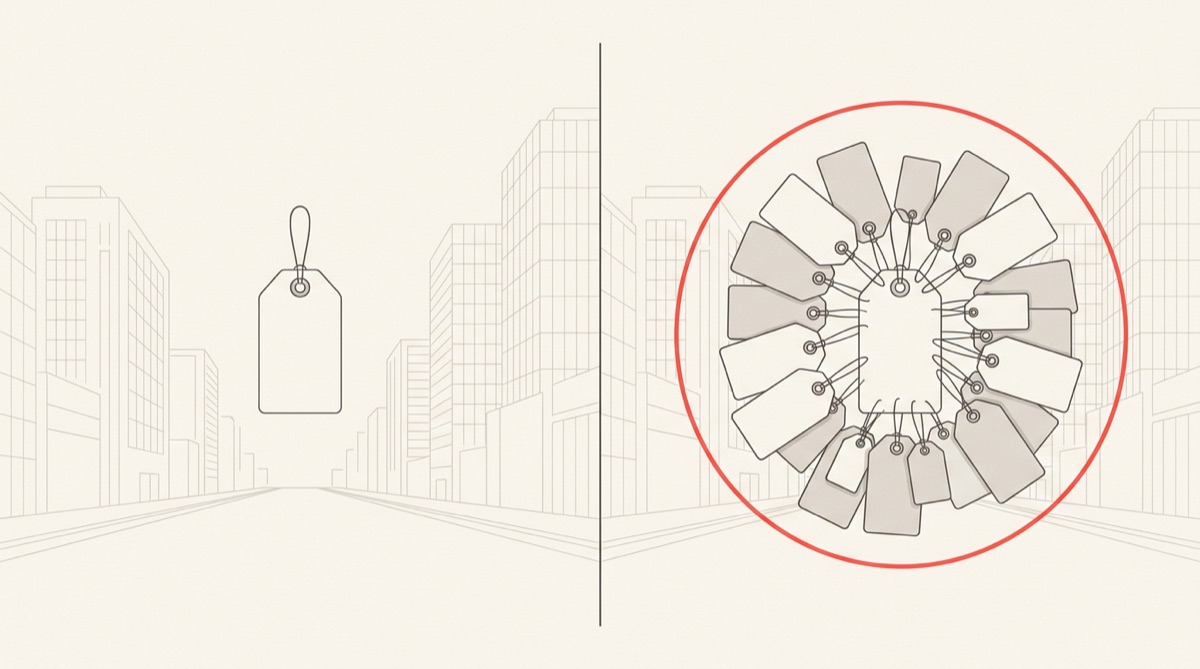 HEADLINEREAL COST
Key takeaways
- The advertised 월세 (wolse, monthly rent) is roughly 60–75% of what leaves your account each month in a Gangnam officetel. 관리비 (gwanribi, maintenance fee), metered utilities and — in some leases — 10% VAT make up the rest.
- Trading deposit for rent is priced at roughly 6–7% a year. Paying ₩20,000,000 more deposit buys you about ₩110,000 a month off. Treat it as an investment decision, not a discount.
- The Gangnam-specific trap is the 업무용 (business-use) officetel: the landlord has tax reasons to keep it registered that way and may push back on your 전입신고 (address registration). Without that registration your deposit has no legal priority.
- Two to four stops out on Line 2 — 서초, 방배, 사당 — cuts one-room rent by roughly a fifth to a third while keeping a single-seat ride to 강남역.
- If your employer signs the lease, protection is not automatic. Korean law extends it to small-and-medium-enterprise corporate leases only when the designated employee actually occupies the unit and registers the address.
Most people arriving for a job on Teheran-ro budget for one number — the monthly rent in the listing — and then spend the first three months discovering the other three. This guide is the arithmetic nobody hands you at onboarding. In HeartStay's concierge inbox, Gangnam requests come almost entirely from people with a signed employment contract and a fixed office address, which is a much narrower problem than 'where should I live in Seoul'. It is also a solvable one.9
First, decide what 'Gangnam' means for you
강남 (Gangnam) is three different things at once: an administrative district (강남구, Gangnam-gu), a subway station (강남역, on Line 2 and the Sinbundang line), and the office corridor along 테헤란로 (Teheran-ro) running east from 강남역 through 역삼 (Yeoksam), 선릉 (Seolleung) and 삼성 (Samseong). That corridor is about 3km long. A room that is a five-minute walk from 강남역 is a 25-minute commute from 삼성역. Get your office's exact address from HR before you look at a single listing — it does more to narrow your search than any budget number.
Teheran-ro corridor stations. All are Gangnam-gu; the 서초구 (Seocho-gu) side begins one stop west of 강남역.
| Station | Lines | Position on the corridor | What the housing stock is |
|---|---|---|---|
| 강남 (Gangnam) | 2, Sinbundang | West end | Officetels, serviced short-stay, the most expensive goshiwon in Seoul |
| 역삼 (Yeoksam) | 2 | One stop east of 강남 | Officetels on the main road, older 원룸 villas in the back streets toward 역삼동 |
| 선릉 (Seolleung) | 2, Suin-Bundang | Two stops east | Officetels; connects south to 한티·도곡 on the Suin-Bundang line |
| 삼성 (Samseong) | 2 | Three stops east | Fewer small units; more apartments and serviced residences |
| 논현 (Nonhyeon) | 7, 9 | North of the corridor | Dense one-room and officetel supply, Gangnam-gu prices |
The number that is not on the listing
A Gangnam officetel listing quotes 보증금 (deposit) and 월세. Your actual monthly outflow has four parts: the rent, the 관리비, the metered utilities that the 관리비 does not cover, and — if the unit is leased as a business asset — value-added tax. In an officetel the 관리비 typically covers common-area electricity, cleaning, security, the lift and often internet; it typically does not cover your own electricity, your own gas for heating and hot water, or your phone. Budget for the maintenance fee as a second rent, because that is what it behaves like.
Figures as of 2026-08 · verify the live listing39
| 고시원 (goshiwon), 강남역·역삼 area | ₩450,000–700,000 / month, deposit ₩0 | Utilities and basic rice/kimchi usually included. Rooms of roughly 4–7㎡. Address registration is frequently not possible — confirm before you pay. |
|---|---|---|
| 원룸 (one-room) in a villa, 역삼동 / 논현동 | ₩700,000–1,000,000 + deposit ₩5,000,000–10,000,000 | 관리비 ₩30,000–70,000 typical. Electricity and gas metered separately. |
| 오피스텔 studio, Teheran-ro corridor | ₩900,000–1,400,000 + deposit ₩10,000,000 | 관리비 ₩100,000–200,000. Ask explicitly whether the quoted rent is 부가세 포함 (VAT included). |
| 오피스텔, 1.5–2 rooms, Teheran-ro corridor | ₩1,400,000–2,300,000 + deposit ₩10,000,000–30,000,000 | The usual choice for a transferee arriving with a partner. |
| Serviced / short-term, 1–3 months, Gangnam | ₩1,600,000–2,600,000 all-in, deposit ₩0–1,000,000 | Correctly priced as a bridge, not a home. Useful for weeks 1–4 while you view properly. |
| 원룸, two to four stops out (서초·방배·사당·이수) | ₩550,000–800,000 + deposit ₩5,000,000–10,000,000 | Same room type, different postcode. This is where the corridor premium shows up most clearly. |
| 관리비 alone, Gangnam officetel | ₩100,000–200,000 / month | Almost never included in the headline number, and not negotiable the way rent is. |
These are bands observed in HeartStay concierge cases and in public listings — they are not official statistics, and our inquiry sample skews heavily Japanese, so it under-represents some segments. Deposit and rent trade off against each other, so every row is a range rather than a price. Before you negotiate, check filed transactions for the specific 동 (neighbourhood) and building on the MOLIT real-transaction system.
Deposit versus rent: what the swap is actually priced at
Newcomers usually assume a bigger deposit produces a dramatically smaller rent. In Seoul it produces a modest, roughly linear one — around ₩50,000–60,000 a month for each ₩10,000,000 of deposit, which works out to an implied rate of about 6–7% a year. The table below holds one Teheran-ro studio constant and moves only the deposit.
Illustrative ladder at a ₩55,000-per-₩10,000,000 conversion. Real listings vary by building, but the slope is what matters.9
| Deposit | Monthly rent, same unit | Rent over 12 months | Total cash committed (deposit + 12 months rent) |
|---|---|---|---|
| ₩0 | ₩1,150,000 | ₩13,800,000 | ₩13,800,000 |
| ₩10,000,000 | ₩1,100,000 | ₩13,200,000 | ₩23,200,000 |
| ₩30,000,000 | ₩990,000 | ₩11,880,000 | ₩41,880,000 |
| ₩50,000,000 | ₩880,000 | ₩10,560,000 | ₩60,560,000 |
| ₩100,000,000 | ₩605,000 | ₩7,260,000 | ₩107,260,000 |
Read the last column, not the second. Moving from ₩10,000,000 to ₩100,000,000 of deposit saves about ₩5,940,000 of rent a year — a genuine 6.6% return on the extra ₩90,000,000. But that ₩90,000,000 is sitting inside somebody else's building, behind whatever mortgage is registered against it, for the length of your stay. For a 12- to 24-month posting the honest conclusion is the opposite of the common advice: a low deposit is not a penalty you are suffering, it is a fee you are paying for liquidity and for a much smaller loss if something goes wrong. In our concierge cases the median deposit is ₩1,500,000 and the median rent ₩600,000 — heavily weighted to the low-deposit end of this ladder.9
The 업무용 officetel trap
Officetels are built and registered as 업무시설 (business facilities). Many are lived in anyway, and Korean courts have long held that the Housing Lease Protection Act follows actual residential use rather than the paperwork — an officetel you genuinely live in is a home for the purposes of that Act. But the protection only switches on when you take occupancy and register your address. A landlord who has claimed business-use tax treatment on the unit has a financial reason to keep the paperwork clean, and that reason can arrive at your negotiation as 'we would prefer you not do 전입신고'.2
Understand precisely what you are being asked to give up. Without the address registration you have no 대항력 (opposability against a new owner) and no 우선변제권 (priority claim on the deposit). If the building is sold or auctioned, you are behind the bank. A ₩100,000 monthly rent reduction in exchange is ₩1,200,000 a year against a deposit of ₩10,000,000 or more with no legal standing. That is not a trade, it is a transfer of risk. The correct answers are: refuse and find another unit, or — if the location is genuinely irreplaceable — cut your deposit to an amount you could afford to lose outright and pay the higher rent.
- 01
Pull the 등기부등본 (property register) yourself
Order it online from the Supreme Court's Internet Registry Office for a small fee. Two things matter: the registered owner's name must match the person or company signing your contract, and the 근저당권 (mortgage) section tells you how much debt sits ahead of your deposit. Do not accept a copy the agent hands you — order your own, and order it again on the morning you sign.
- 02
Check the 건축물대장 (building ledger) for the unit's registered use
Available through the Government24 portal. If the unit is registered as 업무시설, expect the VAT question and the 전입신고 question to come up. Knowing this before the agent raises it changes who is negotiating.
- 03
Put the address registration into the 특약사항 (special terms)
One line, in the contract, in Korean: 임차인의 전입신고 및 확정일자 신청에 동의한다 — the landlord consents to the tenant's address registration and fixed-date application. A landlord who signs this has told you the truth. A landlord who refuses has also told you the truth.
- 04
Confirm the total, VAT included, in writing
Rent, maintenance fee, whether VAT applies, and what utilities are metered separately. Add them and compare that figure — not the headline rent — against the units two stops out.
- 05
File the 전월세 신고 and take 확정일자 on move-in day
Seoul leases above the reporting thresholds must be filed, and the filing stamps the 확정일자 (fixed date) automatically — which is the piece that gives your deposit priority. Doing it on move-in day rather than 'next week' is the whole point: your protection begins the day after your address registration takes effect.
- 06
Report the address change to immigration within 15 days
A registered foreigner must report a change of residence to immigration within 15 days of moving in. In practice, filing the resident address report at your local 주민센터 (community service centre) covers this — confirm at the counter that both have been recorded, and keep the receipt.
If your employer signs the lease
Your strongest negotiating document is not a larger deposit — it is a 재직증명서 (certificate of employment) from a company the landlord recognises. Gangnam landlords screen for payment reliability, and a salaried tenant with a Korean employment contract reads as lower risk than a higher deposit from an unknown source. Ask HR for one in Korean before you start viewing. If your company offers 사택 (company housing) or a rent subsidy, ask specifically whether it is paid against the rent, the maintenance fee, or both — many subsidies quietly exclude 관리비, which is the line that surprises people.
One to four stops out: what the corridor premium actually buys
The single largest lever on your housing budget is not negotiation, it is the decision to live outside the corridor and commute into it. Line 2 runs west from 강남역 through 서초구 and into 관악구 with no transfer; Line 7 covers the 논현–반포–이수 axis; the Suin-Bundang line drops south from 선릉 into 한티 and 도곡, which are still Gangnam-gu but priced below Teheran-ro.
Stop counts are on the named lines. Percentage gaps are what we observe in listings and concierge cases for comparable one-room units, not official statistics — verify the specific building against filed transactions.39
| Station | Lines | Distance to the corridor | What it is like | One-room rent vs Teheran-ro |
|---|---|---|---|---|
| 교대 (Seoul Nat'l Univ. of Education) | 2, 3 | 1 stop to 강남 | Quiet, institutional, older villas and some officetels | Roughly 10–15% lower |
| 서초 (Seocho) | 2 | 2 stops to 강남 | Courts and law offices; calm at night, good street lighting | Roughly 15–20% lower |
| 방배 (Bangbae) | 2 | 3 stops to 강남 | Low-rise residential, families, limited late-night noise | Roughly 20–30% lower |
| 사당 (Sadang) | 2, 4 | 4 stops to 강남 | Dense one-room supply and a large bus interchange; busy and loud after dark | Roughly 25–35% lower |
| 한티 · 도곡 (Hanti / Dogok) | 3, Suin-Bundang | 1–2 stops to 선릉 | Still Gangnam-gu; officetels beside apartment blocks | Roughly 10–20% lower |
| 이수 · 총신대입구 (Isu) | 4, 7 | Line 7 to 논현, then a short walk or one transfer | Mixed student and office population, plentiful small units | Roughly 25–35% lower |
One caution against optimising purely on price: 사당 and parts of 신림 offer the biggest discount and also the busiest late-night street environment on this list. If you commute home after 22:00, walk the route from the station exit to the building door at that hour before you sign, not at 2pm on a Saturday when the agent is free.
Compare rooms on the Teheran-ro corridor against two stops out
Pan west across 교대 and 서초 to see the same room types at a different price, on the same Line 2 ride.
Your first two weeks
From offer letter to a lease you can defend
- Before you fly Fix your commute anchor, not your neighbourhood Get the exact office address from HR. 강남역 and 삼성역 are two different housing markets three kilometres apart.
- Days 1–3 Take a temporary base, not a lease A short-stay or serviced room in Gangnam for the first weeks. Do not sign twelve months from abroad on photographs.
- Days 2–5 Alien registration appointment Book through HiKorea. Seoul slots fill early, and the card is what unlocks a bank account and a phone contract — both of which landlords will ask about.
- Days 3–10 View five to eight units across two price bands Two inside the corridor, four two-to-four stops out. Seeing both in the same week is the only way the gap becomes concrete.
- Signing day Fresh 등기부등본, contract, down payment Order the register again the morning you sign. A mortgage can be registered between your viewing and your signature.
- Move-in day 전입신고 + 확정일자 + 전월세 신고 All on the same day. Priority takes effect from the day after your address registration, so each day of delay is a day your deposit is unsecured.
- Within 15 days of moving in Report the residence change to immigration Keep the receipt with your contract. You will need both again at visa renewal.
What to have with you on signing day
- 여권 (passport)
- 외국인등록증 (alien registration card), or the application receipt If the card has not been issued yet, many landlords accept the application receipt together with your passport. Ask the agent in advance rather than discovering it at the desk.
- 재직증명서 (certificate of employment), in Korean The document that does the most work in Gangnam. Request it from HR before you start viewing.
- Korean bank account details Deposits and rent move by transfer. Cash payments leave you without the record you need if the deposit is later disputed.
- 계약금 (down payment), usually about 10% of the deposit Payable at signing, to the registered owner's account — not to the agency, and not to a third party's name.
- 중개보수 (brokerage fee) budget Optional Set by the Seoul fee schedule and calculated on a converted transaction value, not on the monthly rent alone. Ask for the exact figure in advance and request a 현금영수증 (cash receipt).
- A Korean-speaking companion or your concierge Optional The 특약사항 clauses are where the address-registration consent and the maintenance-fee figure live. They are also the part most likely to be summarised rather than translated.
My office is on Teheran-ro. Is living in the corridor worth the premium?
Compare total monthly outflow, not rent. A Teheran-ro officetel at ₩1,100,000 plus ₩150,000 maintenance is ₩1,250,000 before utilities; a comparable room at 방배 at ₩750,000 plus ₩50,000 is ₩800,000, for a three-stop ride with no transfer. That ₩450,000 a month is what a ten-minute walk to the office costs. Some people should pay it — if you work past midnight regularly, the walk home is worth real money. Most interns and first-posting professionals should not.
The landlord will knock ₩100,000 off if I skip 전입신고. Should I take it?
No. You would be exchanging ₩1,200,000 a year for the legal standing of your entire deposit. If the building is auctioned, an unregistered tenant sits behind the mortgage holder with no priority claim. If that specific unit is genuinely irreplaceable, the only defensible version is to cut your deposit to a sum you could write off completely and accept a higher rent — but the better move is to view three more units.
The listing says 관리비 별도 with no figure. What should I assume?
For a Gangnam officetel, assume ₩150,000 a month until you are shown otherwise, and treat anything under ₩80,000 as a claim that needs evidence. Ask for the last three months of actual bills for that unit, and have the agreed figure written into the 특약사항. Maintenance fees are set by the building's management, not by your landlord, so a verbal reassurance from the landlord is not binding on the party that issues the bill.
Can I sign a six-month lease near 강남역?
Yes, but the supply is thin and priced accordingly — expect serviced or short-stay stock at a meaningful premium over a twelve-month lease on the same room. A shorter contract is legally allowed and, for a tenant, is not the disadvantage it is often described as. The full mechanics are in our short-term guide at /guides/korea-short-term-rental-3-to-6-months.
Do I need a Korean guarantor?
For a low-deposit monthly lease, usually not. Landlords ask for a guarantor mainly where the deposit is large or the tenant has no verifiable income. A certificate of employment plus a Korean bank account resolves the concern in most Gangnam cases. If an agent insists a guarantor is legally required for foreigners, that is not correct — ask for the requirement to be attributed to the specific landlord.